Introduction to Winter DEF Challenges
Diesel Exhaust Fluid (DEF) is a critical component of modern Selective Catalytic Reduction (SCR) systems, but it possesses a physical vulnerability that every fleet manager and truck owner must understand: its freezing point. DEF is a solution composed of 32.5% high-purity urea and 67.5% deionized water. This specific concentration is designed to provide the lowest possible freezing point for a urea-water solution, which is 12°F (-11°C). This is known as the “eutectic point,” where the solution freezes and thaws at a constant temperature, preventing the urea from falling out of suspension in a lopsided manner.
When temperatures drop below this threshold, the fluid begins to crystallize and eventually turns into a solid. For those operating in northern climates, “Frozen Assets” aren’t just a financial metaphor; they are a literal mechanical reality that can lead to vehicle derates, expensive sensor failures, and significant downtime. This guide explores the science of DEF freezing, the technical codes associated with it, and best practices for storage and operation during the winter months. In the context of the global supply chain, a frozen DEF system is a stalled delivery, making winter readiness a non-negotiable priority for the modern diesel operator.
The Science of DEF Freezing and Expansion
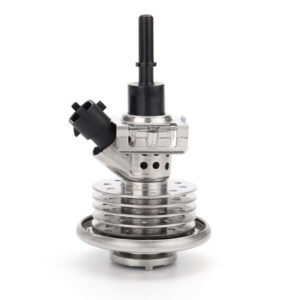
Unlike many automotive fluids like coolant or oil, DEF behaves much like water when it freezes. Most liquids contract when they solidify, but DEF expands by approximately 7%. This expansion is the primary cause of damage in SCR systems. Components like the DEF pump, dosing valves, and the injector itself are precision-engineered with tight tolerances. If DEF is trapped in these lines without proper purging, the expansion can crack plastic housings, blow out rubber seals, or even fracture the stainless steel injector tip.
The Purge Cycle: The System’s Self-Defense
Modern vehicles are equipped with “purge cycles” that run after the engine is turned off. When you turn the key to the ‘OFF’ position, the DEF pump does not stop immediately. Instead, it reverses its flow direction, suctioning the fluid out of the lines and the injector and pulling it back into the protected, heated environment of the tank. This leaves the lines empty and safe from expansion.
However, many operators inadvertently sabotage this process. If a driver disconnects the battery master switch immediately after shutdown (common in fleet operations for fire safety) or if there is a system malfunction that interrupts the ECM’s power, this purge cycle is aborted. The result? Liquid DEF remains in the lines, freezes, expands, and causes “ice-jacking” damage to the internal components. For many fleets, the most common winter repair is the replacement of a DEF pump that was “ice-cracked” because the driver was too quick to cut the power.
The Molecular Stability of Frozen DEF
One common concern is whether frozen DEF is “spoiled.” From a chemical standpoint, freezing and thawing do not degrade the urea. When the fluid melts, it returns to its 32.5% concentration without any loss of efficacy. However, the risk lies in “stratification.” If the fluid thaws very slowly, the urea may settle at the bottom of the tank, creating a higher concentration than the system expects. This is why the SCR system is designed to allow the fluid to reach a fully liquid state before the first injection event occurs.
Common P-Codes Related to Frozen DEF
When the SCR system detects issues related to freezing or the heating system’s failure to thaw the fluid, it will trigger specific Diagnostic Trouble Codes (DTCs). Understanding these is key to rapid diagnostics:
- P204F: Reductant System Performance Bank 1. This is a general code often triggered when the system cannot achieve the desired pressure, frequently due to ice blockages in the filter or pump inlet.
- P20B9: Reductant Heater Control Circuit / Open. This indicates a failure in the heating element designed to thaw the DEF in the tank. It is often caused by road salt corroding the heater’s electrical pins.
- P20BD: Reductant Heater B Control Circuit / Open. Specific to the secondary heating circuit, often found in the DEF lines themselves.
- P208E: Reductant Injector Stuck Closed. In winter, this often isn’t a mechanical failure but a frozen “plug” of DEF at the injector tip that the heater hasn’t reached yet.
- P205C: Reductant Tank Temperature Sensor Circuit Low. The ECM uses this to determine if the fluid is frozen; if the sensor fails, the system stays in a frozen fault state.
Best Practices for Bulk Winter Storage
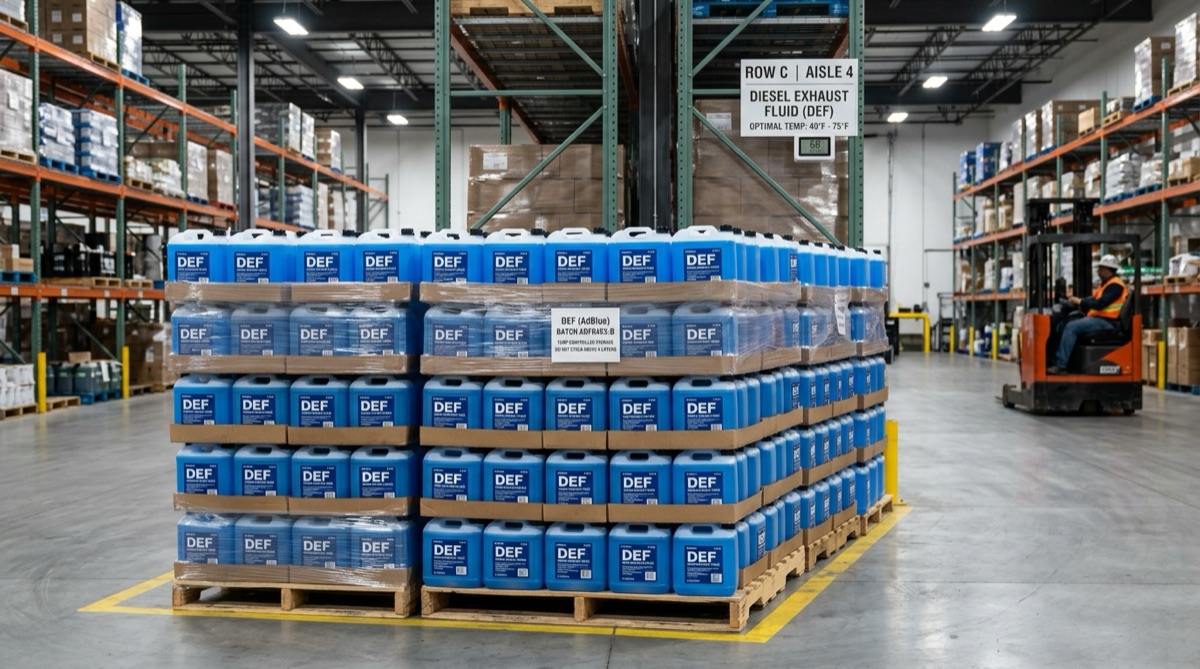
If you store DEF in bulk, whether in 55-gallon drums or 275-gallon totes, your storage environment dictates the longevity and usability of your fluid. DEF should be stored in a conditioned space where temperatures remain between 15°F and 77°F. While freezing does not degrade the urea itself, repeated freeze-thaw cycles can put stress on the storage vessels. Plastic totes can become brittle in extreme cold, and the 7% expansion can split the seams of a full drum.
Sunlight is the enemy of DEF. UV rays accelerate the decomposition of urea into ammonia, even in winter. While the cold slows this process, the “winter sun” can still cause local hot spots in a tank, leading to degradation. Always use opaque containers and store them away from windows or outdoor areas where winter sun can hit them.

On-Vehicle Winter Maintenance Logic
When a vehicle has been sitting in sub-zero temperatures, the SCR system follows a specific logic to prevent damage. The ECM will not attempt to pump fluid immediately, as doing so would burn out the pump motor. Instead, it enters a “Frozen Mode.” It activates the tank heaters—using engine coolant diverted through a thermostatic valve or high-wattage electric elements. The ECM allows the vehicle to operate for a certain period (usually 20-40 minutes) without DEF injection to allow the fluid to reach a liquid state.
Winter Maintenance Schedule
| Component | Action | Frequency |
|---|---|---|
| DEF Filter | Replace before first frost to remove moisture | Annually |
| Tank Heater | Check resistance (Ohms) with multimeter | Every Autumn |
| Purge Valve | Verify audible operation on shutdown (the “hiss”) | Weekly |
| DEF Cap | Clean salt/debris from vent to prevent vacuum | Monthly |
| Wiring Harness | Inspect for corrosion at heater connectors | Pre-Winter |
Step-by-Step Diagnostic for “Frozen” Faults
- Verify Temperature: Use an infrared thermometer to check the DEF tank temperature. If it’s below 12°F, the fluid is likely solid. Check the “Ambient Air Temp” sensor on the dash as well.
- Check Power to Heaters: Use a scan tool to command the DEF heaters on. Check for 12V or 24V at the tank header connector. If power is present but the tank doesn’t warm up, the internal element is broken.
- Inspect Lines: Look for any bulging or “whitening” of the plastic lines. DEF lines are often heated by a resistive wire; check for continuity on this wire.
- Wait for Thaw: If the fluid is frozen, move the vehicle to a heated bay. Never use a torch or open flame on the DEF tank, as it is made of plastic and contains a pressurized fluid.
FAQ: Winter DEF Management
Q: Does DEF expire faster in the winter?
A: Actually, no. DEF shelf life is longest at cooler temperatures. At a constant 50°F, it can last up to 36 months. It is heat that degrades DEF, not cold.
Q: Can I add anti-freeze to my DEF tank?
A: ABSOLUTELY NOT. Never add anything to the DEF tank except certified ISO 22241 DEF. Adding anti-freeze will contaminate the SCR catalyst, leading to a repair bill that can exceed $10,000 for a new catalyst brick.
Q: Why is my truck in “Limp Mode” when it’s cold?
A: If the DEF doesn’t thaw within a specific timeframe (usually 20-40 minutes of driving), the ECM assumes the heater has failed. Since it cannot meet emissions standards without liquid DEF, it will derate the engine.
Q: Is it okay to fill the DEF tank to the brim in winter?
A: It is better to leave a little “expansion room” (about 10% empty). Since DEF expands when it freezes, a completely full tank could potentially crack the tank shell or the header assembly.
Q: My DEF looks “slushy.” Is it still good?
A: Yes. DEF starts to crystallize before it goes solid. As long as it can be pumped and the concentration remains 32.5% when fully liquid, it is perfectly fine to use. The pump’s internal filter will catch any large crystals before they reach the injector.
Recommended Resources and Products:
- Internal Blog: Crystallization: The Winter Threat
- Related Product: DEF Winter Storage & Handling Components
- External Authority: API Diesel Exhaust Fluid Certification
- Technical Reference: PEI Recommended Practices for DEF