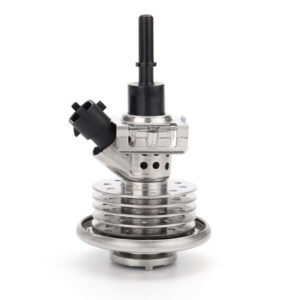
The White Plague of Modern Diesels
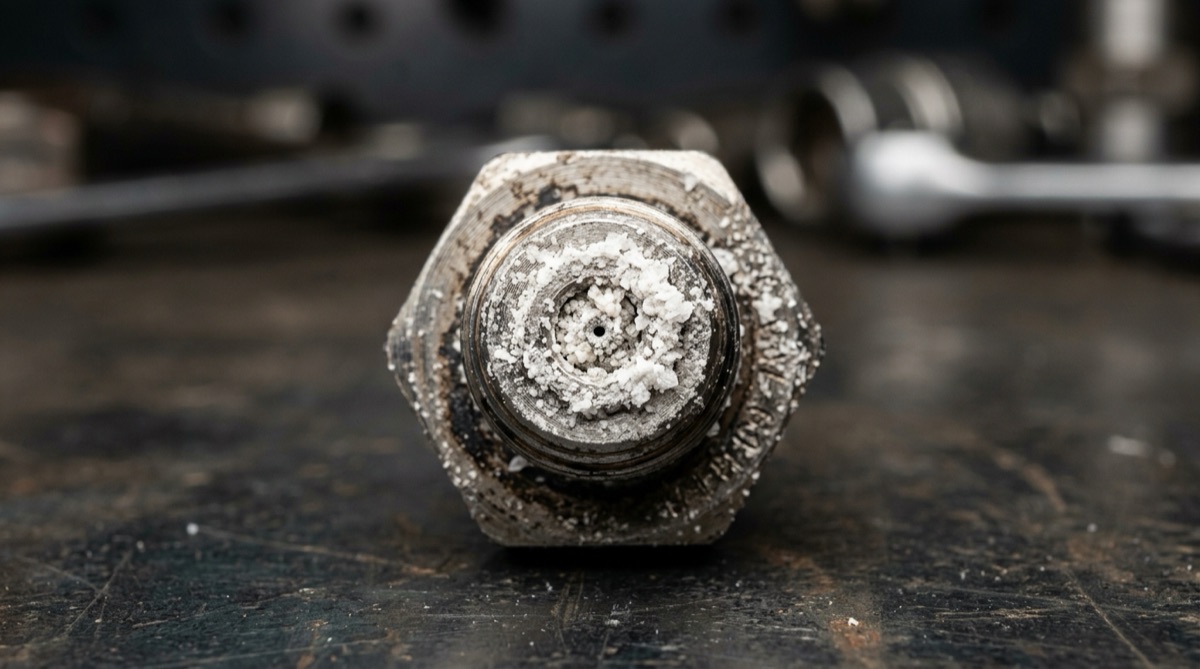
If you’ve ever looked at a failing DEF injector and seen what looks like white, rocky barnacles, you’ve witnessed “DEF Crystallization.” In the industry, it’s often called “the white plague” because of its ability to slowly choke the life out of an exhaust system. These crystals are solid urea, formed when the water in the Diesel Exhaust Fluid evaporates, leaving behind the concentrated mineral. Urea (CH4N2O) is a salt, and like any salt, it will naturally precipitate out of solution when the solvent (water) is removed.
While crystallization is a natural property of DEF, its occurrence *inside* your exhaust system is a sign of a malfunction. Left unchecked, it can lead to complete system blockages, ruined sensors, and engine derates. Understanding why it happens is the first step toward curing it. In this guide, we dive deep into the chemical thermodynamics of urea and provide the definitive cure for this common diesel headache.
The Root Causes of Crystallization
Crystallization occurs when DEF is present in an environment that is warm enough to evaporate the water but not hot enough to cause the urea to undergo “sublimation” (turning into a gas) or react properly via hydrolysis into ammonia.
1. Low Exhaust Temperatures: The 200°C Rule
The most common cause is “cold” operation. SCR systems require the exhaust to be at least 200°C (392°F) for the chemical reaction to work. If a truck idles excessively or is used only for short trips (last-mile delivery), the DEF is sprayed onto a relatively cool exhaust pipe wall. Instead of atomizing and reacting, the fluid “puddles” and dries, forming a layer of hard urea crystals. This process is cumulative; once a small “seed” of crystals forms, it provides more surface area for more DEF to stick to, accelerating the growth of the “rock.”
2. Poor Atomization and Pump Pressure
If the DEF injector is partially clogged or the pump pressure is low (below 5 bar), the fluid is sprayed in large droplets rather than a fine mist. These large droplets have a low surface-area-to-volume ratio, meaning they take longer to evaporate. They often hit the walls of the decomposition tube while still in liquid form, where they stick and crystallize. High pressure is the key to preventing the “White Plague.”
3. Improper Decomposition Tube Design or Damage
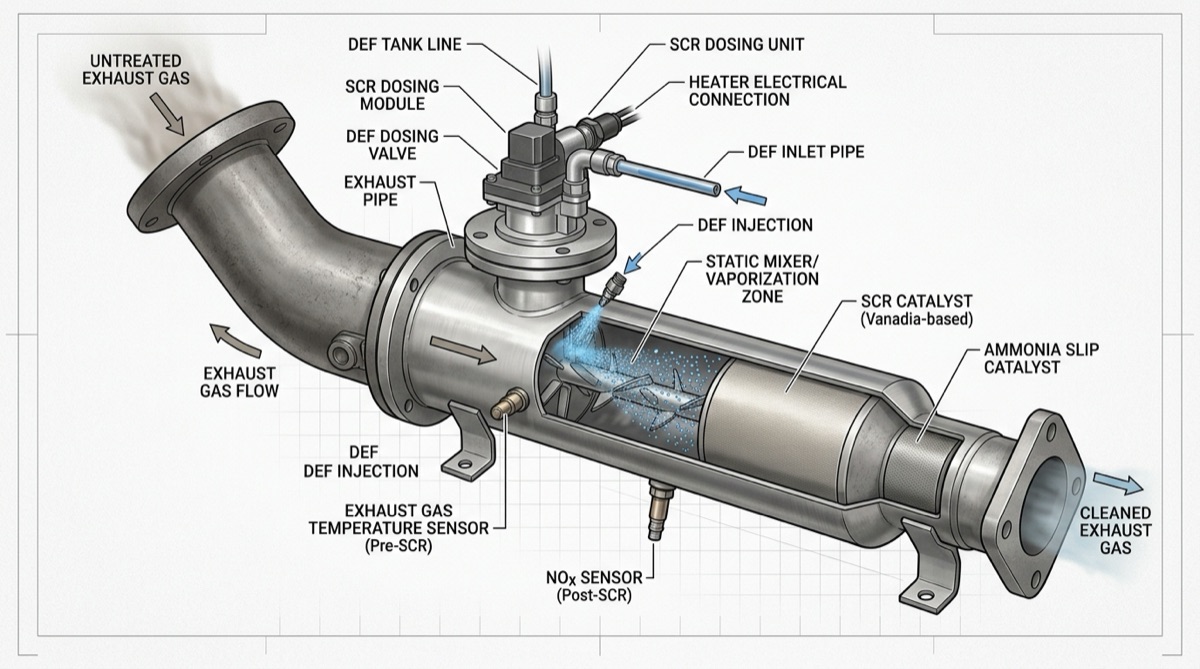
Sometimes, the fault lies in the hardware. If the “mixer”—the spiral fins inside the exhaust designed to create turbulence—is damaged or sooted up, the DEF won’t mix with the air. This leads to “hot spots” and “cold spots” where crystals accumulate.
The “Cure”: How to Clear Crystallization
If you find crystallization, don’t reach for the hammer or a wire brush. Urea is a water-soluble salt, and the best way to deal with it is through chemistry and controlled heat.
Step 1: The Warm Water Soak (The “Free Fix”)
For components like the injector valve, simply removing them and soaking the tip in hot (120°F – 140°F) deionized water for 60 minutes will dissolve the crystals completely. The hot water breaks the ionic bonds of the urea, returning it to a liquid state. Never use a pick, as you can damage the tiny precision holes in the nozzle, which are only microns wide.
Step 2: Thermal Regeneration (The “Highway Cure”)
For crystallization *inside* the exhaust pipe, a “Parked Regen” or a long highway run under heavy load is the best cure. By forcing the exhaust temperatures up to 500°C+ (over 900°F), the urea crystals will undergo thermolysis, breaking down into ammonia and CO2, and blowing out the tailpipe as harmless gas.
Step 3: Chemical Additives and Surfactants
There are now “DEF Crystal Cleaners” available. These are surfactants that lower the surface tension of the DEF fluid. By making the fluid “wetter,” it is less likely to bead up and stick to the metal walls of the exhaust. While effective as a preventative measure, they are rarely a “cure” for a complete physical blockage.
Maintenance and Prevention Table
| Action | Purpose | Frequency |
|---|---|---|
| Reduce Idling | Keeps exhaust temps above 200°C | Daily |
| Doser Tip Inspection | Checks for early “barnacle” growth | Every 50k miles |
| Use ISO 22241 DEF | Minimizes mineral impurities | Every fill-up |
| Highway “Blast” | Promotes thermal self-cleaning | Weekly |
| Filter Swap | Ensures maximum pump pressure | 150k miles |
FAQ: DEF Crystallization
Q: Is “stale” DEF more likely to crystallize?
A: Yes. As DEF ages and the water evaporates from the container, the urea concentration increases. This makes it much more prone to rapid crystallization once it hits the exhaust stream. Always check the production date on the jug.
Q: Can I use a pressure washer to clean the inside of my SCR?
A: ABSOLUTELY NOT. The SCR catalyst is a ceramic honeycomb with microscopic pores. High-pressure water can crack the substrate, and any minerals in your tap water will permanently “poison” the catalyst, requiring a multi-thousand dollar replacement.
Q: Does cold weather make crystallization worse?
A: Indirectly, yes. In cold weather, the engine takes much longer to warm up, and the exhaust stays below the critical 200°C threshold for longer periods during city driving.
Q: My injector is covered in crystals on the *outside*. Is it broken?
A: Not necessarily. It likely means the gasket between the injector and the exhaust is leaking. The DEF is escaping, the water is evaporating, and the urea is building up on the exterior of the pipe. Replace the gasket and clean the injector with hot water.
Q: Can I use a screwdriver to scrape the crystals off the nozzle?
A: No. The nozzle holes are precision-drilled. Even a microscopic scratch can disrupt the spray pattern, leading to future crystallization. Only use hot water.
Recommended Resources and Products:
- Internal Blog: Top 5 Signs of DEF Injector Failure
- Related Product: Porsche Cayenne 3.0 Diesel AdBlue Injector
- External Authority: PEI Guidelines for DEF Storage
- Technical Reference: Urea Chemistry and Applications