P20BE Diagnostic Guide: Reductant Heater B Control Performance Explained
Modern emissions systems are complex webs of sensors, pumps, and heaters designed to reduce nitrogen oxide (NOx) levels. In diesel vehicles equipped with Selective Catalytic Reduction (SCR), keeping the Diesel Exhaust Fluid (DEF) in a liquid state is essential for operation. When the temperature drops, the system activates multiple heaters. If the Engine Control Module (ECM) detects that “Heater B” is not performing as expected, it logs the Diagnostic Trouble Code (DTC) P20BE.
The Role of Heater B in the SCR System
Most heavy-duty and medium-duty diesel trucks use a multi-stage heating strategy. While “Heater A” (P20BA) usually refers to the main tank heater, “Heater B” (P20BE) often refers to a secondary heating element. Depending on the vehicle manufacturer (such as Ford, BMW, or Mercedes-Benz), Heater B could be located within the DEF reservoir assembly or could refer to the internal heating element of the DEF pressure line that runs from the tank to the injector.
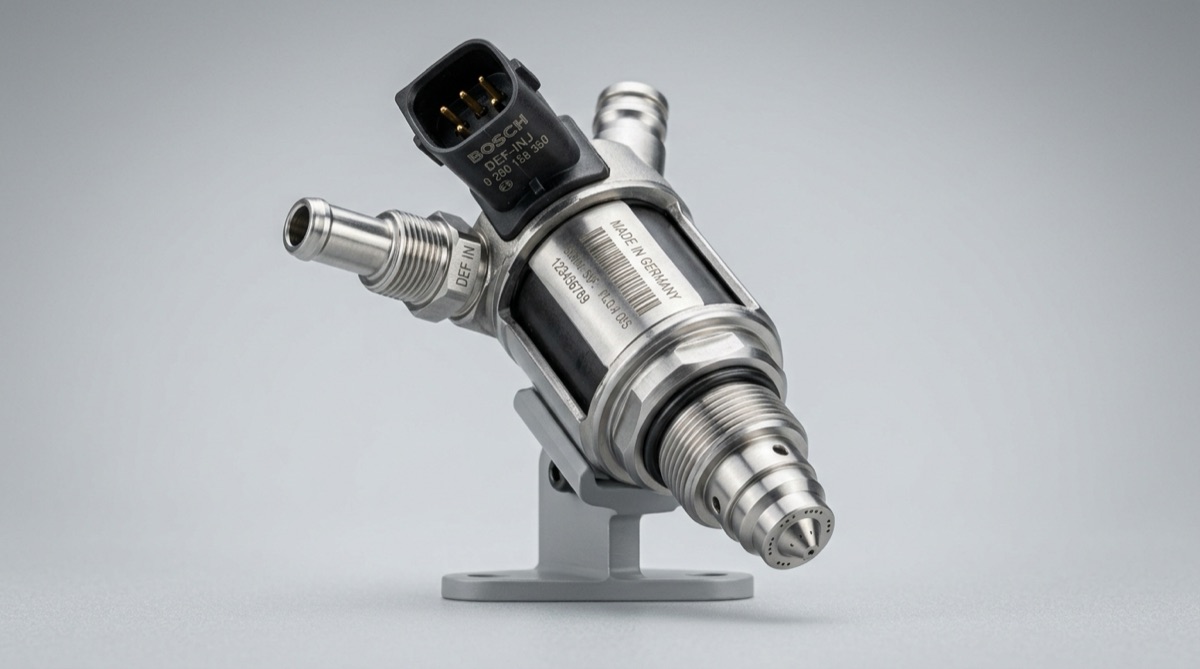
The DEF supply line (Heater B in many systems) is critical for preventing fluid crystallization.
Symptoms of DTC P20BE
Because the SCR system is integrated into the vehicle’s “limp mode” logic, a failure in Heater B is more than just a nuisance. Symptoms include:
- Illuminated MIL: The Check Engine light will turn on immediately.
- SCR System Fault Warning: Messages such as “Exhaust Fluid System Fault” or “Service DEF” will appear on the instrument cluster.
- Inducement Countdown: The vehicle may display a message stating “XX miles until 5 MPH max speed.” This is a regulatory requirement to ensure emissions systems are repaired promptly.
- No Start Condition: In extreme cases or after repeated ignore cycles, the vehicle may enter a “no start” state once the engine is turned off.
Technical Causes for P20BE
Several failure modes can trigger a P20BE code:
- Open Circuit in Heater B: The resistive wire within the heater breaks, preventing current flow.
- Short to Ground: The insulation on the heater wire fails, causing a short circuit. This often blows the fuse.
- High Resistance due to Corrosion: Corroded electrical connectors increase the total resistance of the circuit. The ECM monitors voltage drop; if the drop is too high, it assumes the heater is failing.
- Relay Failure: The mechanical relay that switches power to Heater B may be stuck open or have burnt contacts.
- Ambient Temperature Sensor Discrepancy: If the vehicle’s ambient air temperature sensor is reporting incorrect data, the ECM may attempt to turn on the heater when it isn’t needed, or vice-versa, leading to performance check failures.
Diagnostic and Testing Procedures
Professional diagnostics involve more than just reading the code. Here is the technical breakdown for isolating a P20BE fault:
1. Identify the Component
First, consult the factory service manual for your specific VIN. On a Ford 6.7L Powerstroke, Heater B is often the line heater. On certain Sprinter vans, it may be the “active tank” heater. Knowing which component “B” represents is half the battle.
2. Pinpoint Resistance Check
Using a digital volt-ohm meter (DVOM), check the resistance at the heater’s connector. A typical line heater should read between 2 and 10 ohms. If the reading is in the Mega-ohm range or shows “Open,” the element is defective. If it reads 0 ohms, there is a dead short.
3. Circuit Continuity
Test the wiring from the ECM to the heater connector. Perform a “load test” using a test light or a headlight bulb to ensure the wires can carry the necessary amperage. A multimeter might show 12 volts, but a corroded wire will fail to provide the current needed to light a bulb or power a heater.
4. Relay and Fuse Verification
Verify that the specific fuse for the Reductant Heater B is intact. Swap the relay with a known-good relay of the same type (e.g., the AC compressor relay) to see if the code clears.
Repair Strategies
If the heater itself is faulty, replacement is the only viable option. For line heaters, this involves replacing the entire DEF pressure line assembly. For tank heaters, you may need to drop the DEF reservoir and replace the internal heating element or the entire sender assembly. Warning: Always flush the area with distilled water before disconnecting lines to prevent urea crystals from entering the delicate pump and DEF injector.
Conclusion
P20BE is a serious code that requires immediate attention, especially in winter. By following a structured diagnostic path—checking the fuse, testing element resistance, and verifying wiring integrity—you can avoid “parts cannon” repairs and get back on the road safely. Using high-quality replacement components ensures that the fix lasts through the coldest months of the year.
Recommended Resources
- Internal Resource: Understanding DEF Crystallization: Causes and Cures
- Products: View High-Quality DEF Injectors and Components
- Authority Reference: DieselNet: SCR Systems for Diesel Engines
- Technical Standard: SAE J1939: Network for Heavy-Duty Vehicles