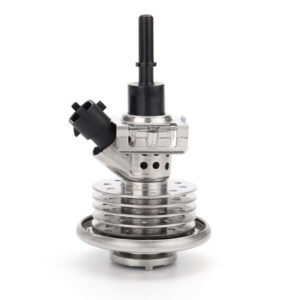
How Does a Dosing Pump Work? A Complete Guide to Precision Fluid Control
Dosing pumps are the unsung heroes of industrial processes, delivering precise amounts of chemicals and additives exactly when and where they're needed. In SCR (Selective Catalytic Reduction) systems, these precision instruments ensure optimal performance and environmental compliance.
What Is a Dosing Pump?
A dosing pump, also known as a metering pump or chemical injection pump, is a positive displacement pump designed to inject precise volumes of fluid into a process stream. Unlike standard pumps that move large volumes of liquid, dosing pumps focus on accuracy and repeatability, making them essential for applications where exact chemical ratios are critical.
Key Characteristics of Dosing Pumps:
- High accuracy (typically ±1% of set flow rate)
- Consistent performance across varying pressures
- Wide turndown ratios (often 100:1 or greater)
- Chemical compatibility with aggressive fluids
- Reliable operation in harsh environments
The Fundamental Working Principle
Dosing pumps operate on the positive displacement principle, which means they move a fixed volume of fluid with each stroke or cycle. This fundamental mechanism ensures consistent, measurable delivery regardless of system pressure variations—a crucial advantage in industrial applications.
The Four-Phase Cycle
Suction Phase
The diaphragm or piston retracts, creating a vacuum that opens the suction valve and draws fluid into the pump chamber.
Compression Phase
The diaphragm moves forward, compressing the fluid and closing the suction valve while opening the discharge valve.
Discharge Phase
The compressed fluid is pushed through the discharge valve into the process line at the precise metered rate.
Reset Phase
The system returns to its starting position, ready for the next cycle, with both valves closed momentarily.
Types of Dosing Pumps
1. Diaphragm Dosing Pumps
Diaphragm pumps are the most common type in industrial applications. They use a flexible membrane (diaphragm) that flexes back and forth to create the pumping action. The diaphragm is typically made from chemically resistant materials like PTFE, EPDM, or Viton, depending on the application.
Advantages of Diaphragm Pumps:
- Excellent chemical compatibility
- No contamination risk (sealed system)
- Self-priming capability
- Can handle slurries and viscous fluids
- Low maintenance requirements
2. Peristaltic Dosing Pumps
Peristaltic pumps use rotating rollers or shoes to compress a flexible tube, creating a wave-like motion that pushes fluid forward. The fluid only contacts the inside of the tube, making these pumps ideal for sterile or highly corrosive applications.
3. Piston Dosing Pumps
Piston pumps use a reciprocating piston within a cylinder to create the displacement action. They offer the highest accuracy and can handle higher pressures, making them suitable for demanding industrial applications.
Critical Components and Their Functions
| Component | Function | Material Considerations |
|---|---|---|
| Drive Motor | Provides mechanical power for pump operation | Explosion-proof ratings for hazardous areas |
| Diaphragm | Creates displacement chamber volume changes | Chemical resistance, temperature tolerance |
| Check Valves | Control fluid direction (suction/discharge) | Corrosion resistance, tight sealing |
| Pump Head | Houses the displacement mechanism | Chemical compatibility, pressure rating |
Dosing Pumps in SCR Systems
In Selective Catalytic Reduction (SCR) systems, dosing pumps play a crucial role in delivering diesel exhaust fluid (DEF) or aqueous urea solution to the exhaust stream. The precision of these pumps directly impacts emission reduction efficiency and regulatory compliance.
SCR Application Requirements:
Performance Criteria:
- Precise DEF injection rates
- Temperature compensation
- Pressure-independent delivery
- Fast response to load changes
Environmental Challenges:
- High temperature operation
- Vibration resistance
- Crystallization prevention
- Contamination protection
Control and Calibration
Modern dosing pumps incorporate sophisticated control systems that allow for precise flow rate adjustment and monitoring. These systems can be manually operated or integrated into automated process control networks.
Control Methods
Manual Control
Direct adjustment of stroke length or frequency through mechanical controls.
Analog Control
4-20mA signal input for proportional flow rate control.
Digital Control
Microprocessor-based control with communication protocols.
Maintenance and Troubleshooting
Proper maintenance is essential for reliable dosing pump operation. Regular inspection and preventive maintenance can prevent costly downtime and ensure consistent performance.
Routine Maintenance Checklist:
Weekly Tasks:
- Check for external leaks
- Verify flow rate accuracy
- Inspect suction line priming
- Monitor pressure readings
Monthly Tasks:
- Clean check valves
- Calibrate flow settings
- Inspect diaphragm condition
- Test safety shutoffs
Common Issues and Solutions
Problem: Inconsistent Flow Rate
Possible Causes: Air in suction line, worn diaphragm, faulty check valves
Solution: Prime system, inspect and replace worn components, clean valves
Problem: No Flow Output
Possible Causes: Blocked suction, empty supply tank, pump not primed
Solution: Check supply levels, clear blockages, prime pump system
Selecting the Right Dosing Pump
Choosing the appropriate dosing pump requires careful consideration of multiple factors. The wrong selection can lead to poor performance, increased maintenance costs, and potential system failures.
Key Selection Criteria:
Technical Requirements:
- Required flow rate range
- System pressure conditions
- Accuracy specifications
- Turndown ratio needs
- Temperature operating range
Chemical Compatibility:
- Fluid chemical properties
- pH levels and corrosivity
- Viscosity characteristics
- Particle content and size
- Temperature effects on materials
Future Trends and Innovations
The dosing pump industry continues to evolve with advances in materials science, digital control technology, and Industry 4.0 connectivity. These innovations are making pumps more reliable, efficient, and easier to integrate into modern industrial systems.
Smart Connectivity
IoT-enabled pumps with remote monitoring, predictive maintenance alerts, and cloud-based analytics.
Advanced Materials
New polymer compounds and ceramic components offering superior chemical resistance and longevity.
Partner with SCR Solutions Experts
Our team of engineers specializes in designing and implementing custom dosing pump solutions for SCR systems. With over 80% of our products supplied to OEMs, we understand the critical requirements for precision, reliability, and performance in emission control applications.
Custom Design
Tailored solutions for your specific application requirements
Quality Assurance
Comprehensive testing and certification programs
Technical Support
Ongoing assistance from installation to maintenance
Conclusion
Dosing pumps are precision instruments that form the backbone of countless industrial processes, from water treatment to emission control systems. Understanding how these pumps work—from their fundamental displacement principles to their sophisticated control systems—is essential for anyone involved in process engineering, maintenance, or system design.
In SCR applications, the accuracy and reliability of dosing pumps directly impact environmental compliance and operational efficiency. As emission regulations become more stringent and industrial processes more demanding, the role of precision dosing equipment will only continue to grow in importance.
Key Takeaways:
- Dosing pumps use positive displacement principles for precise fluid delivery
- Different pump types serve various application requirements and conditions
- Proper selection, installation, and maintenance are critical for optimal performance
- Modern control systems enable integration into automated process networks
- Future innovations focus on connectivity, materials, and predictive maintenance
Whether you're designing a new SCR system, upgrading existing equipment, or troubleshooting performance issues, understanding dosing pump fundamentals will help you make informed decisions and achieve reliable, efficient operation. The investment in quality dosing equipment and proper application engineering pays dividends in reduced maintenance costs, improved process control, and regulatory compliance.