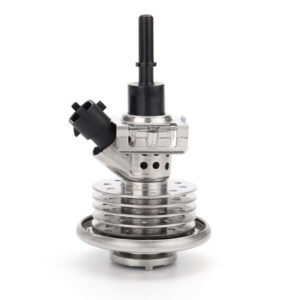
EGR vs SCR: Which Emission Control Technology Reigns Supreme?
When it comes to reducing harmful emissions from diesel engines, two technologies dominate the landscape: Exhaust Gas Recirculation (EGR) and Selective Catalytic Reduction (SCR). But which one delivers better results? Let's dive deep into this critical comparison.
Key Takeaway
While both EGR and SCR serve important roles in emission control, SCR technology generally offers superior NOx reduction efficiency and fuel economy benefits, making it the preferred choice for modern heavy-duty applications.
Understanding the Basics
What is EGR (Exhaust Gas Recirculation)?
EGR technology works by recirculating a portion of exhaust gases back into the engine's combustion chamber. This process reduces combustion temperatures, which in turn decreases the formation of nitrogen oxides (NOx) – one of the most harmful pollutants in diesel emissions.
How EGR Works:
- Exhaust gases are cooled and filtered
- Clean exhaust is mixed with fresh air intake
- Lower oxygen concentration reduces peak combustion temperatures
- Reduced NOx formation at the source
What is SCR (Selective Catalytic Reduction)?
SCR technology takes a different approach by treating exhaust gases after combustion. It uses a catalyst and a reducing agent (typically diesel exhaust fluid or DEF) to convert harmful NOx into harmless nitrogen and water vapor.
How SCR Works:
- DEF (urea solution) is injected into the exhaust stream
- Heat converts DEF into ammonia
- Ammonia reacts with NOx over a catalyst
- NOx is converted to nitrogen and water
Head-to-Head Comparison
| Factor | EGR | SCR |
|---|---|---|
| NOx Reduction Efficiency | 40-50% | 80-95% |
| Fuel Economy Impact | 2-5% decrease | 3-5% improvement |
| Maintenance Requirements | Moderate (cleaning) | Regular (DEF refills) |
| Initial Cost | Lower | Higher |
| Operating Cost | Medium | Lower (fuel savings) |
The Pros and Cons
EGR Advantages
- ✓ Lower upfront investment
- ✓ No additional fluids required
- ✓ Simpler system design
- ✓ Proven technology
EGR Disadvantages
- ✗ Limited NOx reduction capability
- ✗ Increased particulate matter
- ✗ Reduced fuel efficiency
- ✗ Engine fouling issues
SCR Advantages
- ✓ Superior NOx reduction (up to 95%)
- ✓ Improved fuel economy
- ✓ Better engine performance
- ✓ Lower total cost of ownership
SCR Disadvantages
- ✗ Higher initial cost
- ✗ DEF consumption and storage
- ✗ More complex system
- ✗ Temperature-dependent efficiency
Real-World Applications
When to Choose EGR
- Light-duty vehicles with moderate emission requirements
- Applications where initial cost is the primary concern
- Older engine designs being retrofitted
- Short-range delivery vehicles with frequent stops
When to Choose SCR
- Heavy-duty trucks and commercial vehicles
- Long-haul transportation applications
- Applications requiring maximum fuel efficiency
- Meeting stringent emission standards (EPA Tier 4, Euro VI)
The Verdict: Which is Better?
SCR Takes the Lead
While both technologies have their place in emission control, SCR technology emerges as the clear winner for most modern applications. Here's why:
- Superior Performance: 80-95% NOx reduction vs. 40-50% for EGR
- Better Economics: Lower total cost of ownership despite higher upfront cost
- Future-Proof: Meets current and anticipated future emission standards
- Operational Benefits: Improved fuel economy and engine performance
Industry Trends and Future Outlook
The automotive and heavy machinery industries are increasingly favoring SCR technology. Major OEMs have adopted SCR as their primary NOx reduction strategy, and regulatory bodies worldwide are implementing stricter emission standards that favor SCR's superior performance.
Industry Insight
By 2025, industry analysts predict that over 85% of new heavy-duty vehicles will utilize SCR technology as their primary emission control system, with EGR serving mainly as a supplementary technology.
Making the Right Choice for Your Application
The choice between EGR and SCR ultimately depends on your specific requirements:
Budget-Conscious
If upfront cost is your primary concern, EGR might be suitable for light-duty applications.
Performance-Focused
For maximum efficiency and emission reduction, SCR is the clear choice.
Future-Ready
To meet evolving regulations and maximize ROI, invest in SCR technology.
Need Expert SCR Solutions?
As a leading provider of SCR solutions, we specialize in custom systems for OEMs and offer comprehensive technical support. Our professional team can help you design and develop the perfect emission control system for your specific needs.
Address
Building 13, Intelligent Industrial Zone
No.2777 Ningkang East Road
Yueqing City, Wenzhou City
Zhejiang Province, China