Understanding the Cummins DEF Injector System
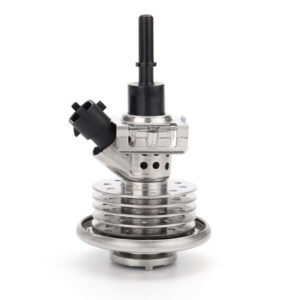
Cummins engines power some of the most demanding commercial vehicles on the road, from long-haul trucks to heavy-duty construction equipment. Every modern Cummins diesel engine equipped with a Selective Catalytic Reduction (SCR) system depends on a precision Cummins DEF injector—also known as a Cummins DEF doser—to deliver the exact amount of Diesel Exhaust Fluid required for NOx reduction.
Whether you operate a fleet of Cummins ISX15 semis, maintain a 6.7L Cummins Ram 2500, or service Cummins ISB-powered delivery trucks, understanding how the DEF injection system works, what fails, and how to replace it correctly saves thousands in downtime and regulatory penalties. This guide covers every major Cummins DEF injector platform, common failure modes, replacement procedures, and the gaskets and seals that must be replaced alongside the injector.
Cummins DEF Doser vs DEF Injector: What’s the Difference?
In Cummins terminology, the terms DEF doser and DEF injector refer to the same component. “Doser” is the terminology Cummins uses in service manuals and parts catalogs. Aftermarket suppliers and general industry usage typically call it an “injector.” When you search for a Cummins DEF injector replacement, you are looking for the same part that Cummins labels as a DEF doser.
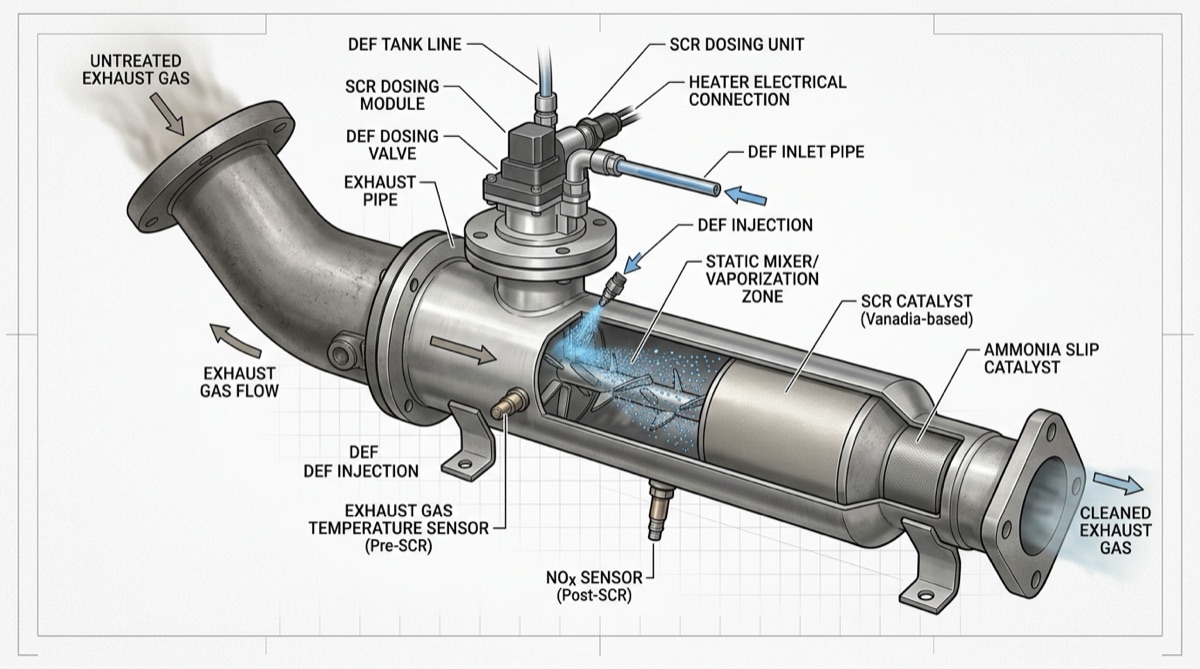
The doser’s job is to atomize DEF into a fine mist and spray it into the exhaust stream upstream of the SCR catalyst. The ECU calculates the required dosing rate based on engine load, exhaust temperature, and NOx sensor feedback. Any deviation from the programmed flow rate triggers fault codes and reduces catalyst efficiency.
Cummins DEF Injector by Engine Platform
Cummins produces DEF dosers for multiple engine families. Each platform uses a specific injector design matched to the engine’s displacement, duty cycle, and emissions calibration:
Cummins ISX and ISX15
The Cummins ISX DEF doser is one of the most commonly replaced components in heavy-duty trucking. The ISX15 platform, found in Freightliner, Peterbilt, and Kenworth tractors, uses a high-flow doser rated for continuous highway operation. The Cummins ISX aftertreatment doser injector is located on the exhaust pipe between the Diesel Particulate Filter (DPF) and the SCR catalyst. Common part numbers include the A050S599 and related supersessions.
ISX doser failure symptoms: P20EE catalyst efficiency codes, excessive DEF consumption, white crystallization around the doser nozzle, and repeated engine derate events. Because the ISX operates at high exhaust temperatures, the doser seals and gasket degrade faster than on lighter-duty engines.
Cummins ISB and ISL (Medium Duty)
The ISB and ISL platforms power delivery trucks, school buses, and medium-duty vocational vehicles. The Cummins ISX DEF injector design differs from the ISB/ISL unit in flow rate and mounting geometry. ISB dosers typically have lower flow capacity and use a different electrical connector. Verify the engine family code before ordering replacement parts.
6.7L Cummins (Ram 2500/3500/4500/5500)
The def injector 6.7 Cummins found in Ram heavy-duty trucks is physically smaller than the ISX unit but operates on the same principle. Ram 2500 and 3500 models from 2013 onward use a doser integrated into the DEF dosing module mounted on the frame rail. The Cummins DEF doser injector on these applications is prone to crystallization in cold climates due to the shorter exhaust plumbing and lower average exhaust temperatures.
Common Cummins DEF Injector Failure Modes
Across all Cummins platforms, DEF injector failures follow a predictable pattern. Recognizing these patterns early prevents secondary damage to the SCR catalyst and DPF:
| Failure Mode | Symptoms | Root Cause |
|---|---|---|
| Nozzle Crystallization | Reduced spray, P20EE, white deposits | DEF evaporation at shutoff; non-ISO DEF |
| Internal Leakage | High DEF usage, fluid pooling | Worn seal ring; thermal cycling damage |
| Electrical Open/Short | P20B9, P20BA, P20BE codes | Corroded connector; damaged coil |
| Gasket Failure | Exhaust leak at doser flange | Heat damage to Cummins DEF doser gasket |
The Cummins DEF injector gasket and Cummins doser injector gasket are wear items that should be replaced every time the doser is removed. Reusing a heat-cycled gasket creates an exhaust leak that destroys the new injector’s spray pattern within weeks. Always order the complete gasket set with your replacement doser.
Cummins DEF Injector Replacement Procedure
Replacing a Cummins DEF doser requires attention to detail. The procedure varies slightly between ISX highway engines and 6.7L pickup applications, but the core steps are consistent:
- Depressurize the DEF System: Use Insite or equivalent diagnostic software to relieve pressure from the DEF lines.
- Disconnect Electrical Connector: Inspect pins for corrosion. Replace the connector pigtail if green corrosion is visible.
- Remove DEF Line: Use line disconnect tools. Do not twist or kink the nylon DEF tubing.
- Unbolt the Doser: Remove the mounting bolts. On ISX engines, the doser may be seized to the exhaust flange—apply penetrating oil and allow it to soak before forcing.
- Clean the Flange Surface: Remove all old gasket material and crystallized DEF. Use a plastic scraper to avoid scoring the flange.
- Install New Gasket: Position the new Cummins DEF doser gasket on the flange. Do not use RTV or additional sealant unless specified by Cummins.
- Install New Doser: Torque to specification. ISX15 dosers typically require 18-22 Nm. Over-tightening crushes the gasket; under-tightening causes exhaust leaks.
- Reconnect and Prime: Reconnect the DEF line and electrical connector. Prime the system and run a forced regeneration or doser test.
- Clear Codes and Verify: Clear all stored fault codes. Road test the vehicle and monitor live data for proper DEF dosing rates.
Critical Note: After installing a new Cummins ISX DEF doser injector, the ECM requires an injector adaptation reset. Failure to perform this calibration causes inaccurate dosing and repeated fault codes within the first 50 miles. Refer to Cummins official service documentation for the correct calibration procedure for your engine family.
Cummins DEF Injector Gasket and Seal Kits
Never replace a Cummins DEF doser without replacing the associated seals. The heat cycles experienced by these components destroy gasket elasticity within a single service interval. Here are the components you need:
- Cummins DEF doser gasket: The primary exhaust flange gasket. Available in graphite and multi-layer steel (MLS) variants. MLS gaskets withstand higher temperatures and are recommended for ISX15 applications.
- Cummins DEF injector gasket: The secondary seal between the doser body and the mounting adapter. This gasket prevents DEF leakage into the exhaust flange area.
- Cummins doser injector gasket: On some ISX configurations, a third gasket seals the DEF inlet port. Check the parts diagram for your specific engine serial number.
- DEF line O-rings: Replace the quick-connect O-rings on the DEF supply and return lines. These harden and leak after heat exposure.
For a complete overview of DEF system maintenance across all brands, see our DEF system maintenance guide collection.
OEM vs Aftermarket Cummins DEF Injectors
Cummins OEM dosers are manufactured to exact flow specifications with tolerances of ±2%. Aftermarket alternatives vary widely in quality. Here is what fleet managers should know:
| Specification | Cummins OEM | Premium Aftermarket | Budget Aftermarket |
|---|---|---|---|
| Flow Accuracy | ±2% | ±3-5% | ±8-15% |
| Nozzle Material | Stainless steel | Stainless steel | Coated brass |
| Seal Compound | Viton/PTFE | Viton | Nitrile rubber |
| Warranty | 12-24 months | 12 months | 30-90 days |
| Typical Lifespan | 3-5 years | 2-3 years | 6-12 months |
Recommendation: For ISX15 and other heavy-duty applications where downtime costs exceed $1,000 per day, invest in OEM or premium aftermarket dosers. The flow accuracy directly impacts catalyst life, and a ±15% flow deviation from a budget unit can destroy an SCR catalyst worth $3,000-$8,000 within 6 months. Browse our Cummins-compatible DEF injector catalog for OEM-specification options.
Preventive Maintenance for Cummins DEF Injectors
Extending the life of your Cummins DEF doser requires disciplined maintenance habits:
- Use Only Certified DEF: ISO 22241-compliant DEF prevents crystallization and nozzle blockage. Contaminated DEF is the leading cause of premature doser failure. Learn more about ISO 22241 DEF quality standards.
- Replace DEF Filters: Cummins recommends DEF filter replacement every 100,000 miles or annually, whichever comes first.
- Monitor for Early Codes: P20EE, P20EF, and P20B9 codes are early warnings. Address them before the doser fails completely.
- Avoid Short Trips: Frequent cold starts prevent the exhaust from reaching the 180°C minimum required for DEF decomposition. Unburned DEF crystallizes in the nozzle.
- Winter Storage: In sub-zero climates, allow the doser heater circuit to complete its cool-down cycle before shutting down the engine. Interrupting the heater cycle leaves frozen DEF in the nozzle.
Conclusion
The Cummins DEF injector—whether you call it a doser, injector, or reductant delivery unit—is a precision component that demands proper selection, installation, and maintenance. From the ISX15 highway tractor to the 6.7L Ram pickup, every Cummins platform relies on accurate DEF dosing to maintain emissions compliance and avoid costly engine derates.
When replacement is necessary, do not cut corners on gaskets, seals, or calibration. The cost of a complete OEM-quality replacement with proper installation is a fraction of the expense associated with catalyst damage, roadside breakdowns, and failed compliance inspections.
Need a Cummins-compatible DEF injector? Our DEF injector catalog includes OEM-specification units for ISX, ISB, ISL, and 6.7L platforms with full gasket kits and competitive fleet pricing.