Why Is My DEF Pump Not Priming?
You turn the key, wait for the glow plugs, start the engine, and then see it: the “Exhaust Fluid System Fault” message. Or worse, the dreaded “Service DEF System” warning that means your truck is heading for derate. One of the most common root causes is a DEF pump that will not prime.
The short answer: A DEF pump fails to prime due to (1) a clogged DEF filter or pickup screen, (2) air in the lines from a leak or recent service, (3) a frozen or crystallized tank, (4) a failed pump motor or relay, or (5) contaminated DEF that has damaged the pump impeller. In most cases, the problem is the filter or air in the system—both fixable in under an hour. A failed pump motor requires module replacement.
This guide walks through every cause, symptom, and fix for a DEF pump that will not prime, covering Cummins, Ford, Duramax, and all major diesel platforms.
How the DEF Pump Priming Process Works
Before troubleshooting, understand what “priming” means in a DEF system. When you turn the ignition to ON, the DEF control module runs a self-test sequence:
- The module checks DEF level and temperature sensors.
- If the fluid is liquid (not frozen), the pump activates for 10-30 seconds.
- The pump draws DEF from the tank, through the filter, and pressurizes the supply line to 5-12 bar.
- The module monitors pressure via the built-in pressure sensor.
- If target pressure is reached within the time limit, the system reports ready. If not, a fault is logged.
When this sequence fails, the ECU stores codes like P203F (reductant level low), P204F (reductant system performance), or P207F (reductant quality). The exact code varies by platform, but the root cause almost always traces back to one of the five issues below.
5 Reasons Your DEF Pump Won’t Prime
1. Clogged DEF Filter or Pickup Screen
This is the most common cause and the easiest to fix. The DEF filter—located inside the tank or in-line between the tank and pump—traps contaminants before they reach the pump. Over time, the filter becomes clogged with crystallized DEF, algae, or debris.
Symptoms: The pump runs but cannot build pressure. You may hear the pump buzzing continuously instead of reaching a steady pressure and shutting off.
Fix: Replace the DEF filter. On most trucks, this is a 15-minute job requiring only basic hand tools. Filters cost $15-$40.
Prevention: Replace the DEF filter every 30,000 miles or annually, whichever comes first. Use only ISO 22241-compliant DEF from reputable sources.
2. Air in the DEF Lines
Air enters the system when DEF lines are disconnected during service or when a leak develops at a fitting. The pump cannot create pressure with air in the line because air compresses instead of building hydraulic pressure.
Symptoms: The pump runs longer than normal (40-60 seconds vs 10-30 seconds), then shuts off without reaching target pressure.
Fix: Use a scan tool to command the “DEF System Prime” or “Reductant Air Bleed” procedure. Some platforms require cycling the ignition multiple times. On Cummins engines, Insite has a dedicated air bleed function.
Prevention: After any DEF line service, always run the prime procedure before starting the engine.
3. Frozen or Crystallized DEF in the Tank
DEF freezes at 12°F (-11°C). If the tank heater has failed or the truck sat in extreme cold overnight, the DEF solidifies. The pump cannot draw frozen fluid, and attempting to run the pump against ice can damage the impeller.
Symptoms: The pump runs for a few seconds, then shuts off with a P203F code. The DEF tank level sensor may read erratically.
Fix: Allow the tank to thaw. Park the truck in a warm garage or let the engine idle with the block heater active. Do not force the pump to run against frozen DEF.
Prevention: Test the DEF tank heater before winter. Keep the tank above 50% full. Use a block heater in extreme cold.
4. Failed Pump Motor or Relay
The DEF pump is a brushed DC motor that drives a diaphragm or gear pump. Like any electric motor, it has a finite lifespan. Excessive cycling, contaminated DEF, and running dry all accelerate wear.
Symptoms: The pump does not run at all—no sound, no vibration. Alternatively, the pump runs but makes a grinding or squealing noise.
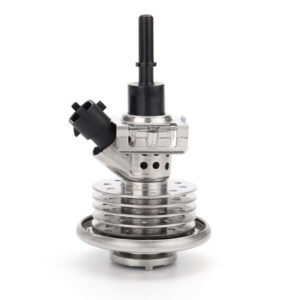
Fix: On most platforms, the pump is integrated into the dosing module and cannot be replaced independently. The entire module must be replaced. Cost: $180-$550 depending on platform and parts quality.
Diagnosis: Use a scan tool to command the pump on manually. If it does not run, check the relay and fuse first. If power is present at the module but the pump does not activate, the motor has failed.
5. Contaminated DEF Damaging the Pump
DEF contaminated with dirt, metal particles, or incorrect fluid (antifreeze, water, diesel fuel) destroys the pump impeller and seals. The DEF system has no secondary filter after the pump, so any contamination that passes the tank filter goes straight to the dosing module.
Symptoms: The pump runs but produces erratic pressure readings. The DEF quality sensor reports out-of-spec fluid.
Fix: Drain the entire DEF tank. Flush with distilled water. Replace the filter. Replace the dosing module if the pump has been damaged. Refill with certified DEF.
Prevention: Never add any fluid other than certified DEF to the tank. Do not use bulk DEF from unverified sources.
DEF Pump Priming Troubleshooting by Symptom
| Symptom | Most Likely Cause | First Check | Estimated Fix Time |
|---|---|---|---|
| Pump runs but no pressure | Clogged filter or air in lines | DEF filter condition | 15-30 min |
| Pump runs too long then stops | Air in lines or weak pump | Line connections for leaks | 30-60 min |
| Pump does not run at all | Failed motor, relay, or fuse | Fuse and relay first | 1-2 hours |
| Pump makes grinding noise | Contamination or mechanical failure | DEF quality test | 2-3 hours |
| Pump works when warm but not cold | Frozen DEF or weak heater | Tank heater operation | 30-60 min |
Step-by-Step DEF Pump Priming Procedure
If you have resolved the underlying issue (replaced the filter, fixed the leak, thawed the tank), follow this procedure to prime the system:
- Fill the DEF Tank: Ensure the tank is at least 25% full. The pump cannot prime reliably from a nearly empty tank.
- Turn Ignition to ON (Not Start): On most platforms, the DEF pump primes automatically when the ignition is in the ON position.
- Wait for Prime Cycle: Listen for the pump. The prime cycle typically lasts 10-30 seconds. You should hear a steady humming from the dosing module or tank area.
- Use Scan Tool if Needed: If the pump does not prime automatically, use a scan tool to command the “DEF System Prime” or “Reductant Pump Test” function.
- Check for Leaks: Inspect all DEF line connections for leaks during the prime cycle. A leak will show as dripping or misting.
- Clear Codes: Once the system primes successfully, clear all stored fault codes.
- Road Test: Drive for 10-15 minutes and monitor live data to confirm the system maintains pressure during normal operation.
Frequently Asked Questions
How do I know if my DEF pump is working?
Turn the ignition to ON and listen near the DEF tank or dosing module. You should hear a steady hum lasting 10-30 seconds. If you hear nothing, or if the sound is grinding or irregular, the pump has a problem.
Can I drive with a non-priming DEF pump?
You can drive short distances, but the ECU will progressively derate the engine. The truck may limit speed to 50 mph or less. Address the issue immediately to avoid being stranded.
How much does a DEF pump replacement cost?
On most platforms, the pump is integrated into the dosing module. Replacement costs $180-$550 for the module plus $120-$200 labor. Some platforms allow independent pump replacement for $80-$150.
How often should I replace the DEF filter?
Every 30,000 miles or annually. Trucks operating in dusty environments or using non-certified DEF may need more frequent filter changes.
Can a bad DEF injector cause the pump not to prime?
Indirectly, yes. A severely clogged injector can create back-pressure that the pump detects as a blockage, causing the module to shut down the pump to prevent damage.
Why does my DEF pump prime when cold but not when hot?
This usually indicates a weak pump motor. Cold DEF is more viscous and easier for a failing pump to move. As the fluid warms and thins, the worn pump cannot maintain the required flow rate.
Do I need a scan tool to prime the DEF pump?
Not always. Most systems prime automatically when the ignition is turned to ON. However, after repairs or when air has entered the system, a scan tool with the “DEF Prime” function significantly speeds up the process.
What does a DEF pump sound like when it fails?
A healthy pump produces a steady, low-pitched hum. A failing pump may produce a high-pitched whine, grinding noise, or no sound at all.
Can I replace just the DEF pump?
On some older platforms, the pump is a separate component. On most modern trucks (2015+), the pump is integrated into the dosing module and cannot be replaced independently. Check your service manual.
Where can I buy a replacement DEF pump or dosing module?
Browse our DEF dosing module catalog for OEM and premium aftermarket pumps and complete modules for all major diesel platforms.
Conclusion
A DEF pump that will not prime is a frustrating problem, but it is rarely catastrophic. In most cases, the fix is simple: replace a clogged filter, bleed air from the lines, or thaw a frozen tank. Only when the pump motor itself has failed does the repair become expensive—and even then, a dosing module replacement is a straightforward job for most diesel technicians.
The key to avoiding pump problems is preventive maintenance: replace the DEF filter on schedule, use only certified DEF, and address small leaks before they introduce air into the system. A $20 filter change prevents a $400 module replacement.
For platform-specific DEF system repair guides, visit our complete diagnostic resource library.