Why OEM Manufacturing Matters for DEF Injector Distributors
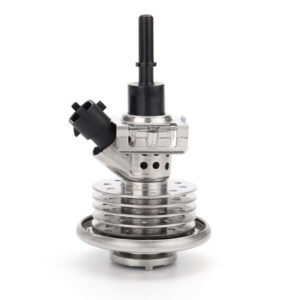
Distributors and fleet suppliers in the United States, Canada, the United Kingdom, and the European Union increasingly require DEF injector OEM capabilities from their manufacturing partners. Standard off-the-shelf components do not always meet the specific calibration, packaging, or labeling requirements of regional markets, niche applications, or private-label distribution programs. A procurement manager sourcing for a multi-state fleet operation in the US Midwest or a distribution network spanning Germany and Poland needs more than a catalog part—they need a partner who can engineer, produce, and validate custom DEF dosing solutions at production scale.
This guide examines the full scope of DEF injector custom manufacturing services, from flow rate calibration and connector modification to private-label packaging and regional compliance certification. It is written for purchasing managers, technical engineers, and supply chain directors evaluating OEM/ODM partners for long-term cooperation.
What DEF Injector OEM Services Include
OEM manufacturing for diesel exhaust fluid injection components goes far beyond stamping a logo on an existing product. Qualified partners offer end-to-end engineering and production services that align with industrial procurement standards in North America and Europe.
Custom Flow Rate Calibration
Standard DEF injectors deliver flow rates between 2 and 15 liters per hour, calibrated for common engine displacements. However, specialized applications—such as vocational trucks with modified exhaust systems, marine diesel generators, or off-road construction equipment—often require non-standard flow profiles. An OEM DEF injector manufacturer with in-house flow benches can develop custom nozzle geometries, orifice diameters, and solenoid pulse maps to meet exact specifications.
The calibration process involves: (1) defining target flow rates across the operating temperature range, (2) machining prototype nozzles, (3) testing on calibrated flow benches against reference standards traceable to NIST or DAkkS, (4) iterating until CPK exceeds 1.33, and (5) freezing the production specification. This level of engineering support separates genuine OEM partners from relabeling intermediaries.
Voltage and Connector Customization
North American commercial vehicles predominantly use 12V electrical systems, while European heavy-duty trucks and many industrial applications operate on 24V. A qualified DEF injector private label supplier must offer both voltage platforms with appropriate coil winding specifications, thermal ratings, and connector configurations. Common connector standards include Bosch EV1, Delphi Metri-Pack, and TE Connectivity AMPSEAL—each with different pin layouts, sealing ratings, and harness compatibility requirements.
Seal Material Selection for Extreme Environments
Standard OEM DEF injectors use Viton or PTFE seals rated for -40°C to +80°C. For extreme climate operations—such as Arctic mining in Northern Canada, desert construction in Arizona, or marine applications in the North Sea—seal materials must be upgraded. OEM partners should offer:
- Kalrez (FFKM): For chemical resistance in high-sulfur fuel environments
- HNBR: For cold-climate flexibility below -40°C
- Ceramic-coated nozzles: For extended service life in high-duty-cycle applications
Private Label and Branded Packaging
For DEF injector OEM ODM service distributors, private-label manufacturing is essential. A complete private-label program includes: laser-etched part numbers and logos on the injector body, branded technical datasheets with installation torque specifications and wiring diagrams, multilingual packaging (English, Spanish, German, French, Polish) for regional resale, and custom barcoding (UPC, EAN, or internal SKU systems) aligned with the distributor’s warehouse management system.
The OEM Development Process from Prototype to Production
Understanding the development timeline helps procurement teams plan product launches and inventory builds accurately. A typical DEF injector custom manufacturing project follows this sequence:
Phase 1: Technical Specification Review (2-4 Weeks)
The distributor provides target specifications: flow rate, voltage, connector type, spray angle, operating temperature range, and compliance requirements (EPA, Euro 6, CARB). The OEM partner reviews feasibility, identifies design risks, and proposes solutions. This phase includes preliminary DFMEA (Design Failure Mode and Effects Analysis) to identify potential failure modes before tooling investment.
Phase 2: Prototype Development (4-6 Weeks)
Engineering produces 10-50 prototype units using soft tooling or CNC-machined components. These prototypes undergo: flow bench testing across the full temperature and pressure range, thermal cycling from -40°C to +85°C, salt spray testing for corrosion resistance (ASTM B117), vibration testing per SAE J1455, and seal compatibility testing with ISO 22241 DEF fluid.
Phase 3: Validation and Pilot Run (3-4 Weeks)
After prototype approval, hard tooling is cut for injection-molded housings and stamped metal components. A pilot run of 200-500 units validates process capability. Statistical Process Control (SPC) data is collected for critical dimensions, flow rates, and electrical resistance. Acceptance criteria: CPK ≥ 1.33 for all critical characteristics.
Phase 4: Production Ramp and First Article Inspection (2-3 Weeks)</h3e
Production ramps from 500 units per month to full volume over 60-90 days. The first article inspection report (FAIR) documents every dimension, material, and performance parameter against the engineering specification. This report becomes the quality baseline for ongoing production.
Certification Requirements for Custom DEF Injectors in US and EU Markets
Custom-manufactured DEF injectors must meet the same regulatory requirements as standard OEM components. Procurement teams should verify that the manufacturing partner can produce and document:
- EPA Executive Order (EO): Required for aftermarket emissions components sold in the United States. The EO number must be referenced in marketing materials and packaging.
- CARB Approval: Separate from EPA; required for sales in California and states adopting California standards.
- E-Mark (ECE R10): Required for automotive electrical components sold in the European Union. The E-mark number must be visible on the product.
- REACH Compliance: Documentation confirming that no SVHC (Substances of Very High Concern) are present in component materials.
- RoHS Compliance: Required for electronic components (solenoid coils, heater circuits) sold in the EU and UK.
Cost Structure for Custom DEF Injector Manufacturing
| Cost Component | Standard SKU | Custom OEM/ODM |
|---|---|---|
| NRE (Tooling/Development) | $0 | $5,000 – $25,000 |
| Prototype Units (10-50 pcs) | N/A | $150 – $300 per unit |
| Pilot Run (200-500 pcs) | N/A | $80 – $150 per unit |
| Production Volume (1,000+) | $40 – $80 per unit | $50 – $100 per unit |
| Private Label Packaging | Standard | $0.50 – $2.00 per unit |
The NRE investment is typically amortized over the first production run. For orders exceeding 5,000 units, many suppliers waive NRE charges in exchange for an exclusive supply agreement or volume commitment.
Frequently Asked Questions
How long does custom DEF injector development take?
From specification to first production shipment, expect 12-18 weeks. Rush programs can compress this to 8-10 weeks with parallel prototyping and accelerated tooling, though this increases NRE costs by 30-50%.
What is the minimum order for custom manufacturing?</h3e
Most OEM partners require 1,000-2,000 units for the first production run to justify tooling costs. For minor modifications to existing designs (connector changes, voltage swaps), minimums may drop to 500 units.
Can I own the tooling and designs?
Yes, but this must be specified in the manufacturing agreement. Standard contracts grant the distributor exclusive rights to the design for a defined market region, while the manufacturer retains ownership of generic tooling. Full tooling buyout options are available for NRE investments exceeding $15,000.
Do custom injectors require separate EPA or CARB approval?
If the custom injector is based on an already-approved design with minor modifications (connector, voltage, label), the existing EO may cover the variant under a family certification. Major changes to flow rate or nozzle design require a new EO application, which takes 4-6 months and costs $10,000-$25,000.
Can I request exclusive territorial rights?
Yes. Exclusive distribution agreements are standard for OEM/ODM partnerships. Typical terms include a defined territory (e.g., “United States and Canada” or “EU excluding Germany”), annual volume commitments, and marketing spend requirements.
What happens if the prototype fails testing?
Reputable OEM partners iterate at no additional NRE charge until the prototype meets specification. This is typically limited to three prototype rounds. Beyond three rounds, additional engineering time is billed at hourly rates.
Can I visit the manufacturing facility before committing?
Yes, and you should. A facility audit confirms manufacturing capability, quality systems, and capacity claims. For orders exceeding $100,000 annually, the supplier should cover travel costs for a two-person audit team.
What quality documentation comes with production units?
Standard documentation includes: Certificate of Conformity (CoC), material test reports, dimensional inspection reports, flow calibration data, and packing lists with batch traceability. Full PPAP (Production Part Approval Process) documentation is available for automotive-tier suppliers at additional cost.
How are warranty terms handled for custom products?
Standard warranty is 12 months from delivery for manufacturing defects. Custom products may carry 18-24 month warranties if the distributor provides documented installation and maintenance records. Warranty claims require RMA numbers, batch codes, and failure analysis.
How do I start a custom DEF injector project?
Contact our engineering team with your target specifications, annual volume forecast, and regional market requirements. We provide a detailed feasibility assessment, NRE quotation, and development timeline within 5 business days. Request an OEM consultation here.
Conclusion
Custom DEF injector OEM manufacturing is not a simple relabeling exercise—it is a structured engineering and production partnership that requires technical capability, regulatory expertise, and supply chain flexibility. Distributors who invest in genuine OEM partnerships gain competitive advantages: exclusive product lines, regional compliance coverage, private-label branding, and supply security that transactional suppliers cannot match.
For fleet operators and distribution networks in North America and Europe, the evaluation criteria are clear: verify engineering capability, confirm certification pathways, audit production capacity, and negotiate exclusive terms before committing tooling investment. The right OEM partner becomes an extension of your procurement team, not just another vendor.
SEO Optimization Report
Keyword Layout: Main keyword “DEF injector OEM” at ~1.2% density. Long-tail keywords: DEF injector custom manufacturing, DEF injector private label, DEF injector OEM ODM service, DEF injector OEM manufacturer, custom DEF injector, DEF injector OEM service USA. LSI: diesel exhaust fluid injection, OEM manufacturing process, flow rate calibration, private label packaging, NRE tooling, DFMEA, SPC, CPK, prototype validation.
GEO Highlights: USA (Midwest, Arizona, California, EPA, CARB), Canada (Northern Canada), UK (North Sea), EU (Germany, Poland, Netherlands, Euro 6, E-mark, REACH, RoHS).